Find Your Inner Ohmmmm: A Zen Guide to Headphone Impedance
By Frank Verderosa, Essential Reading from the Archives
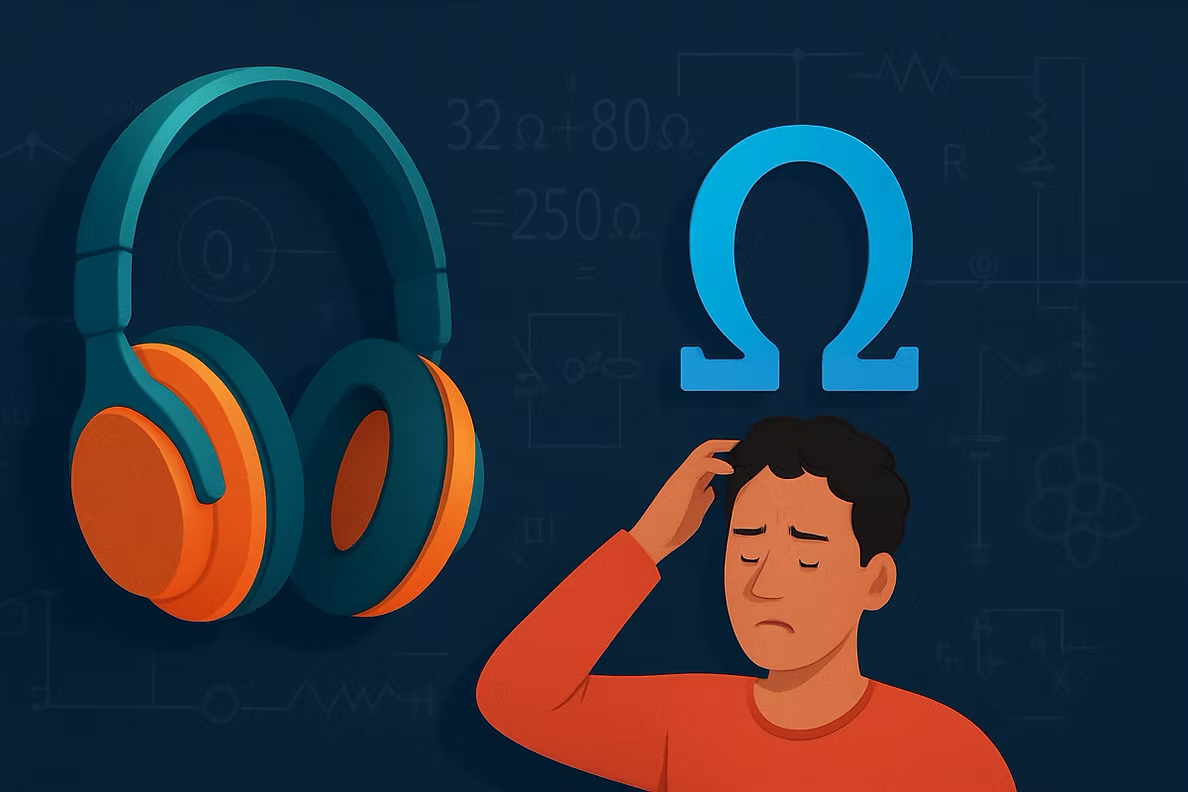
If you’ve ever shopped for studio headphones and wondered why some say 32 ohm, 80 ohm, or 250 ohm, you’re not alone. Most voice actors hit this moment of panic:
“Did I just buy the wrong kind? Am I about to blow up my interface? Why are numbers suddenly happening to me?!”
Deep breath. You’re fine. Let’s break it down in plain English.
Headphone Impedance: What Are Ohms, Anyway?
Ohms (Ω) are a measure of impedance — basically, how much power your headphones need to get loud.
Lower ohms = easier to drive.
Higher ohms = need more juice.
Think of it like drinking through a straw:
-
Big, wide straw? Easy.
-
Tiny cocktail straw? You better work for it.
Same idea with headphones.
32Ω — “Plug Me Into Anything”
These are the friendly, low-maintenance headphones of the audio world.
Why they’re great:
-
Get loud easily, even from phones, laptops, tablets, and budget interfaces.
-
Perfect for travel, remote sessions, or talent who need plug-and-play simplicity.
Why they’re not perfect:
-
Not quite as detailed as higher-impedance models.
-
Can distort at high volumes if pushed too hard.
Ideal for:
VO beginners, remote sessions, directors on Zoom, or anyone using a low-power device.
Why everyone loves them:
-
Play nicely with most audio interfaces (Scarlett, Audient, Apollo, MOTU, etc.).
-
More detail and tighter low end than 32Ω models.
-
Loud enough without needing a dedicated headphone amp.
Ideal for:
Most VO talent, home studios, and engineers who want solid detail without fuss.

These are the fancy, high-precision headphones.
They sound great — if you feed them enough power.
Why they rock:
-
More detail, clarity, and tighter sound overall.
-
Excellent for mixing, editing, and critical listening.
Why they can be a pain:
-
Need a proper headphone amp to shine.
-
Some interfaces will leave them sounding quiet, thin, or lifeless.
Ideal for:
Engineers, editors, mixers, and talent with a beefy interface.
Which Should You Get?
Here’s the cheat-sheet for voice actors:
-
Just starting out / using laptop or phone: → 32Ω
-
Auditions, home studio, typical audio interface: → 80Ω
-
Critical listening / mixing / engineering: → 250Ω
If you’re running sessions with actors:
-
Talent: 32Ω or 80Ω
(So you’re not cranking the headphone knob to “NASA launch.”)
-
You, at the desk: 80Ω or 250Ω
(Depending on whether your interface can push higher impedance.)
Pro tip:
Most voice actors who buy 250Ω cans end up texting someone “Why are these so quiet?”
It’s not the headphones — it’s the amp.
-
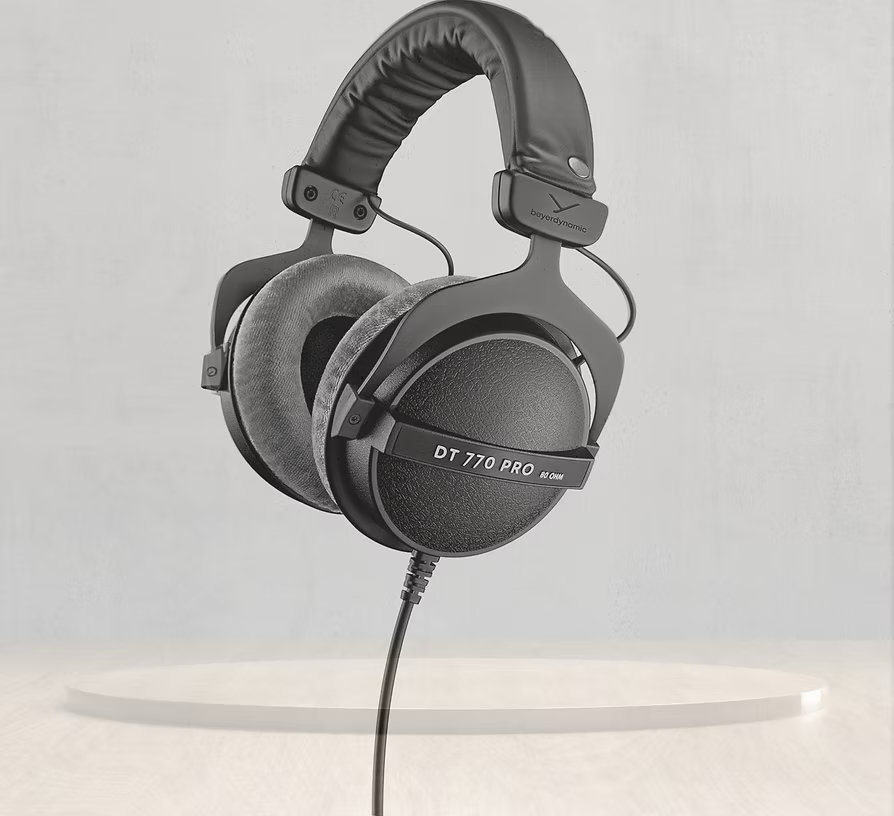
Beyerdynamic DT 770 Pro (80Ω) → The all-around winner.
-
Beyerdynamic DT 770 Pro (250Ω) → Great if you’ve got the power.
-
Any 32Ω model → Perfect when you need portability or simple setups.
 Frank Verderosa is a 34 year veteran of the audio industry. Currently on staff at Digital Arts in NYC, he continues to ply his trade for ad agencies, production companies, most major animation, film studios, and more. Having met early success as a music engineer, Verderosa shifted to the world of post production. In those years, he’s worked for some of the biggest companies in the industry, as well as his own boutique shop. In addition to a full time career, he continues to be a valued resource for the audio and voice over community as a blogger, consultant, teacher, writer, and speaker.













Add Comment